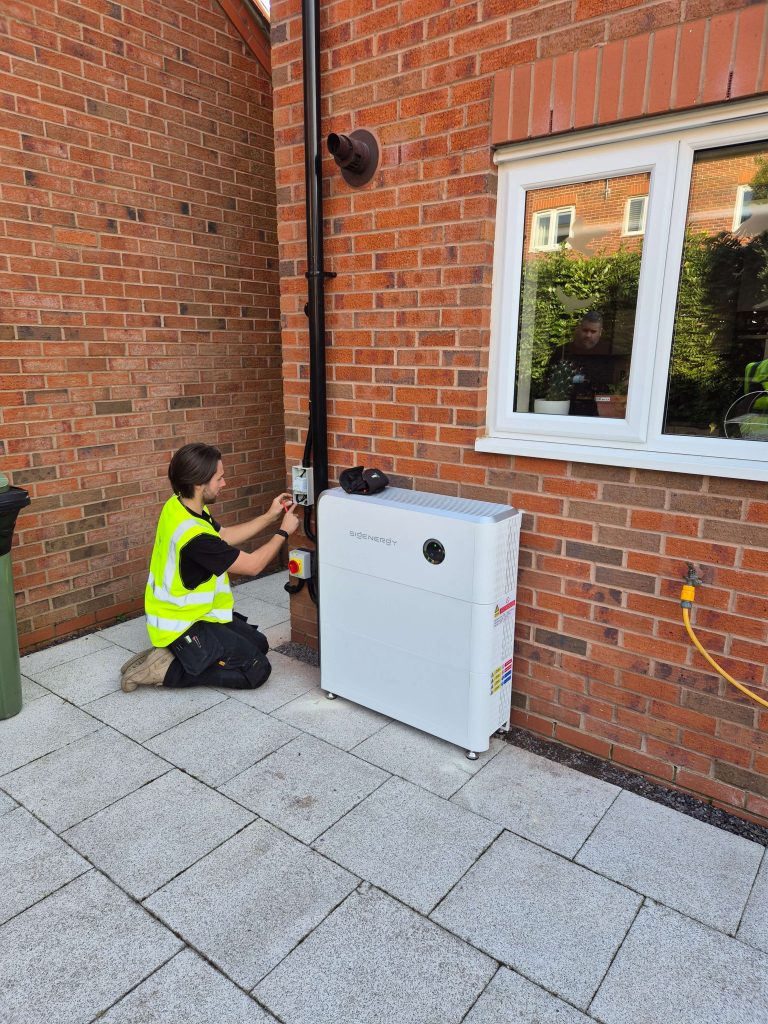
Home battery storage
A home battery stores the electricity your solar panels generate during the day so you can use it in the evening and overnight. Without a battery, surplus energy goes back to the grid for a few pence per unit. With a battery, you keep it and avoid buying it back at full price later.
How does a home battery work?
During the day, your solar panels often generate more electricity than your home is using. A battery captures that surplus automatically. In the evening, when your panels stop producing, the battery discharges to power your home instead of the grid.
A typical home uses most of its electricity between 5pm and 10pm, which is exactly when the sun is going down and solar panels generate less and less electricity. A battery bridges that gap.
Without a battery, a solar household self-consumes around 30–50% of what they generate. With a battery, that figure can rise to 60–80%.
What size battery do I need?
The right battery size depends on your evening electricity usage and the size of your solar system.
5kWh battery
Covers 4–5 hours of typical evening usage in a smaller household. A good fit if you have a 3–4kWp solar system and relatively low consumption.
10kWh battery
The most common choice for a 3–4 bedroom home. Covers a full evening’s usage for most households and makes the most of a 4–6kWp solar system.
10kWh+
or modular systems
For homes with higher consumption, electric vehicles, or heat pumps. Modular systems allow you to add capacity later if your energy needs grow.
We’ll recommend a size and product type based on your actual usage, not a generic rule. Oversizing wastes money; undersizing leaves savings on the table.
Which batteries does Voltflow install?
We carry multiple battery brands so we can match the right product to your home.
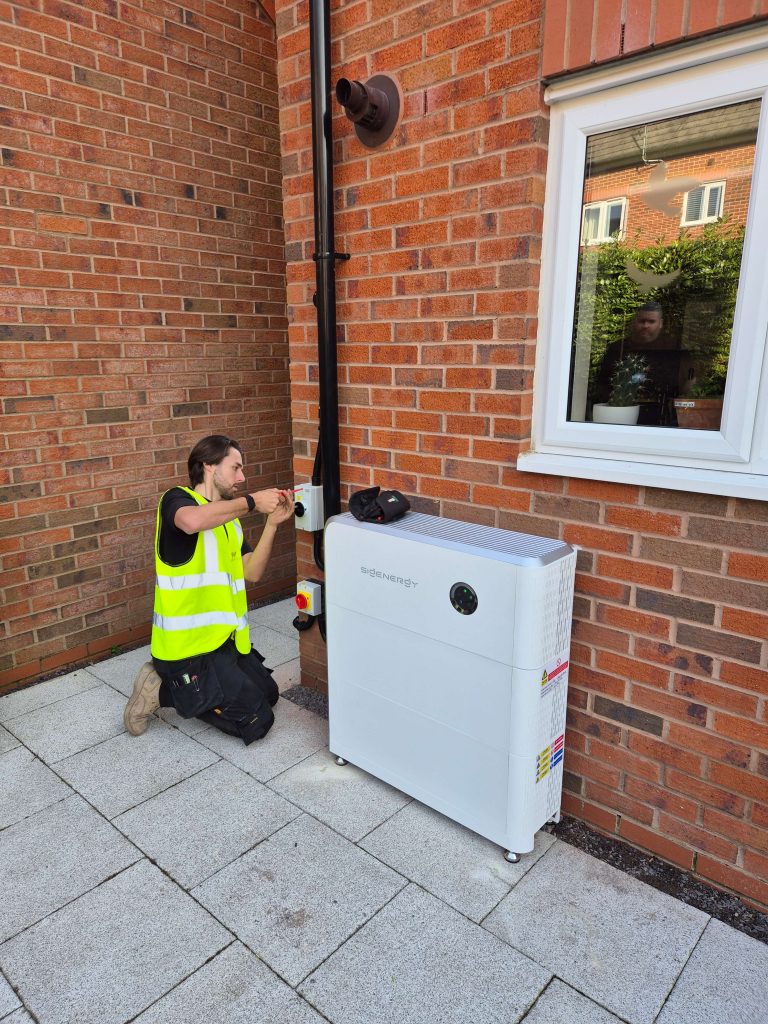
Sigenergy SigenStor
SigenStor is an integrated, modular battery system that combines solar inverter, battery storage, EV charging and smart energy management in a single stacked unit. It is a strong option for homeowners who want a system that can grow over time. More battery modules can be added later, and the system is designed to support additional functionality such as EV charging without needing a completely new installation. That makes it particularly useful if you expect your electricity use to increase in future, for example if you add an electric vehicle, heat pump or larger solar array.
AlphaESS
A modular lithium iron phosphate (LFP) battery system. Starts at 5kWh and scales upwards by adding modules. Good long-term flexibility if you plan to add an EV charger or heat pump in future.
Both systems use LFP chemistry, which offers longer cycle life and better safety than older lithium-ion types. Both come with 10-year warranties.
How much can a battery save?
Savings depend on how much solar surplus you capture, your electricity tariff and whether you use a smart time-of-use tariff.
As a rough guide, adding a battery to a solar system increases annual bill savings by £200–£400 from self-consumption alone. And with a smart tariff like Octopus Go, you can even charge the battery overnight at around 7–8p per kWh and use that stored energy during peak hours when grid electricity costs 24p+. That arbitrage adds another £200–£400 per year.
Is a battery right for your home?
A battery makes the most financial sense if you have solar panels and use most of your electricity in the evening, if you’re on or willing to switch to a time-of-use tariff, or if you have an electric vehicle you charge at home.
If you’re at home during the day and already use most of your solar generation directly, the payback on a battery is longer. We’ll be upfront about that. We’ll tell you whether a battery makes sense for your situation